


AI APP DEVELOPMENT
Build AI into the way people use your app.
Give customers or staff an AI feature that helps them complete a useful task. Grendigital develops AI-enabled applications and integrates AI into suitable existing products, with the experience and its operating limits designed together.
Discuss your AI feature
Tools chosen for the app you need.






FEATURES PEOPLE CAN USE
Start with the experience you want to improve.
Our AI app development work focuses on what the person using the product needs to achieve. We assess the feature in that context before selecting the model or deciding how it connects to your information.
CONVERSATIONAL FEATURES
Chat within the product
VOICE INTERACTION
Voice and receptionist experiences
WITHIN AN EXISTING TASK
Assistance with information
HOW WE DEVELOP THE FEATURE
Design the complete user journey.
The AI response sits within a wider experience. We work through what happens before and after it, including the moments when the feature needs more information or cannot finish the task.
Define the useful result
Identify the user and the task the feature should help complete. Agree which parts depend on AI and what a successful experience should look like.
Review information and access
Check the content or records the feature needs and the access rules already in place. For an existing application, assess its structure and supported integration points.
Prototype and test the experience
Build a contained version and review realistic examples. Test unclear requests and incomplete information, then refine both the interface and the AI behaviour.
Prepare a controlled release
Check the agreed journeys and deployment requirements. Decide how to monitor use and collect feedback, with support and maintenance responsibilities agreed before rollout.
PRODUCT DESIGN AROUND AI
Make the feature’s behaviour clear.
People need to understand what an AI feature can do and what still requires their judgement. We design that understanding into the interaction and the actions that follow.
The information behind a response
Use the relevant approved material and make its source visible where the task calls for it. Plan who keeps that material current. Providing context can improve relevance, but it does not guarantee a correct answer.
Access follows the user
An AI feature should respect the application’s permissions. Define which records it can retrieve for each user and test the separation between customer accounts where relevant.
Review before a consequential action
Preparing a draft and sending it are different steps. Agree when the user needs to check a result or approve an action, and make the confirmation understandable in the interface.
A usable fallback
The model or a connected service may be unavailable. Give the person a useful next step and a route to support, preserving the context needed to continue the task.
COST & DELIVERY CONSIDERATIONS
What shapes an AI feature’s scope?
The visible interaction is only part of the work. Data preparation and the behaviour expected under load can influence both delivery and ongoing costs.
An existing app or a new product
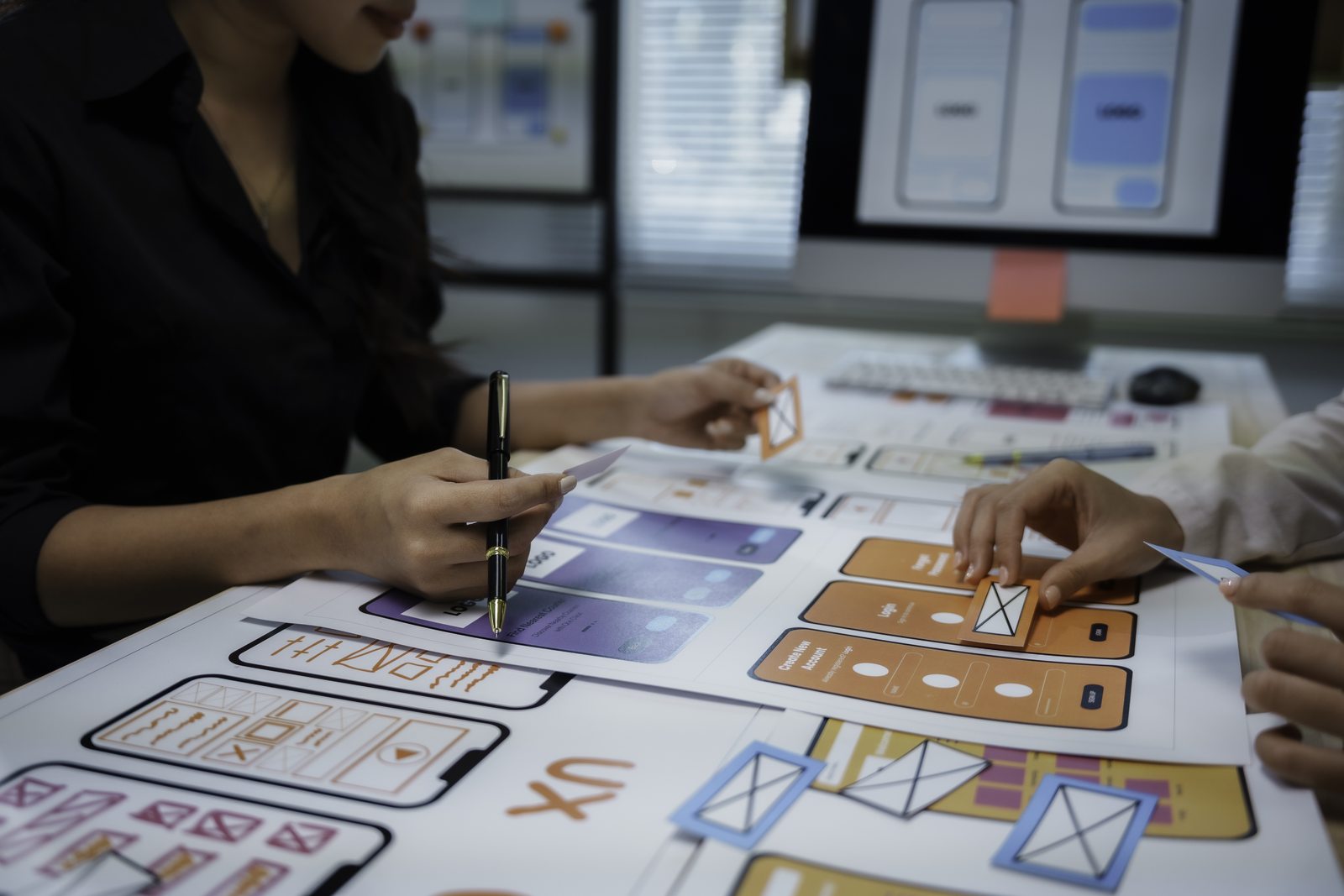
Adding a feature depends on the current application’s code and access. A new product needs its wider user journey scoped as well; the AI capability is one part of that release.
The material it uses
A feature working from approved documents has different requirements from one reading changing customer records. Assess the content and permissions before estimating the integration work.
Response time and usage
Expected demand affects the model choice and service design. Estimate running costs from likely usage and test whether response times suit the task.
Evaluation and maintenance
Prompts, source information and model versions can change the result. Agree representative checks and ownership for updates, alongside the arrangements for ongoing application support.
AI WITHIN A PRODUCT
Sidekik brings conversation into business discovery.
Sidekik, featured in our selected work, includes AI chat, voice and phone receptionist capabilities. It provides a concrete example of AI features within a broader customer experience.
AI-ENABLED EXPERIENCE
Sidekik
The product combines business discovery with conversational and receptionist features. The interface gives those capabilities a place within the customer journey.
Read the Sidekik case studyFEATURE PLANNING
A feature that fits its task
We can help assess where assistance would be useful in your product. Start with a task people already understand and a result they can review.
Explore AI consultingDISCUSS YOUR APPLICATION
Your next product decision
Tell us how people use your application today and where they need help. We can review the opportunity and define what a first version should demonstrate.
Discuss your AI featureBEFORE DEVELOPMENT
Questions about AI-enabled apps.
You can bring an existing product or a new application idea. We review the starting point and the intended feature before recommending the development approach.
Is AI-assisted development the same as an app with AI?
AI-assisted development describes tools used during the build. An app with built-in AI gives users a capability such as chat, voice or assistance with information. We scope those product features explicitly and test their behaviour within the application.
Can you add AI to an application we already have?
We first review the application and the access available to its code and services. Some products support an extension directly; others need changes to their foundations. The assessment establishes what is feasible before we agree the delivery scope.
Do we need to train our own AI model?
An existing model may support the feature when connected to appropriate information and tools. We assess that option against the requirements before considering more specialised work. Model choice should account for the quality needed and the ongoing cost at expected usage.
GRENDIGITAL BY GRENDESIGN
What should AI help your users do?
Share the application and the experience you want to improve. Based in Mornington and Sydney, Grendigital is Grendesign’s specialist AI and automation division, developing digital solutions for customers in Australia and internationally.